
St. Cloud Address Sources by Era
No single source names every person who occupied a St. Cloud property. The parcel roll and deeds identify owners. A reverse directory may identify a listed occupant. A census names a household at the enumeration date. Permits describe work and applicants, while probate, death, cemetery, and obituary records can explain why a name disappears.
| Source | Time covered | Where kept | What it contributes |
|---|---|---|---|
| Current parcel roll and sales history | Current roll; sale history varies | Osceola Property Appraiser | Owner, situs, parcel ID, legal description, sales links |
| Official Records and historical index | Series-specific; no universal online cutoff published | Osceola Clerk | Grantors, grantees, deeds, book/page, recording dates |
| City and reverse directories | Exact St. Cloud runs not verified online | State Library, Osceola Library, Osceola History | Listed householder, address, spouse, work, or phone when printed |
| Federal census | Public through 1950; 1960 scheduled for 2032 | NARA and library partner access | Enumerated household and relationships |
| Sanborn maps | March 1924, eight sheets | Library of Congress | Building footprint and use, not occupant names |
| Permits and preservation records | Record-specific; 2024 preservation inventory | City of St. Cloud | Building changes, parcel references, address and year-built leads |
The exact local directory years and the clerk’s series-by-series image cutoff remain research gaps. A careful previous residents search states those limits and uses office, library, or archive fallbacks.
Start St. Cloud Previous Residents
Enter the current street address in the Osceola Property Appraiser search. Save the parcel number, situs address, owner name, legal description, subdivision, lot and block, jurisdiction, and displayed sales references. Situs is the physical location. The mailing address is where the tax notice goes, so it cannot prove where an owner lived.
A parcel number is the best join key across modern St. Cloud systems. The city permit research form requires it. GIS uses it to locate the land. A deed may cite it or repeat the same legal description. If a street number changed, the legal description keeps the search tied to the same property.
- Grantor
- The person or entity conveying an interest in the property.
- Grantee
- The person or entity receiving that interest.
- Chain of title
- The linked sequence of recorded transfers for the same land.
- Legal description
- The lot, block, subdivision, or metes-and-bounds text identifying land apart from its street label.
Walk Osceola Deeds Backward
The Osceola Clerk Official Records gateway is the main deed index. Start from today’s owner and current purchase instrument. Recording gives public notice, but the Clerk warns that accepting an instrument does not mean each party’s identity was verified.
- Open the parcel’s current sales reference or search today’s owner as grantee, the buyer.
- Read the purchase deed and record the seller, date, instrument number, book/page, and legal description.
- Search that seller as an earlier grantee to find when the seller bought the same land.
- Match the legal description at every transfer. A similar name or nearby address is not enough.
- Repeat until the online trail ends, then request the earlier index or deed book from the Clerk.
Instrument number and book/page are direct retrieval keys. Date filters help with common names. Search trusts, businesses, spouses, and spelling variants when the deed uses them. An image can aid research, but a screen image and a certified copy are different products.
Bridge Older St. Cloud Deeds
The public gateway does not state one date when every Official Records series becomes searchable or imaged. Do not assume one. The Historical Records Index, courthouse, and Osceola Clerk Records Center bridge older paper holdings. JustFOIA is another request route for material unavailable online.
The successful manifest image shows the Records Center and older-record fallback.
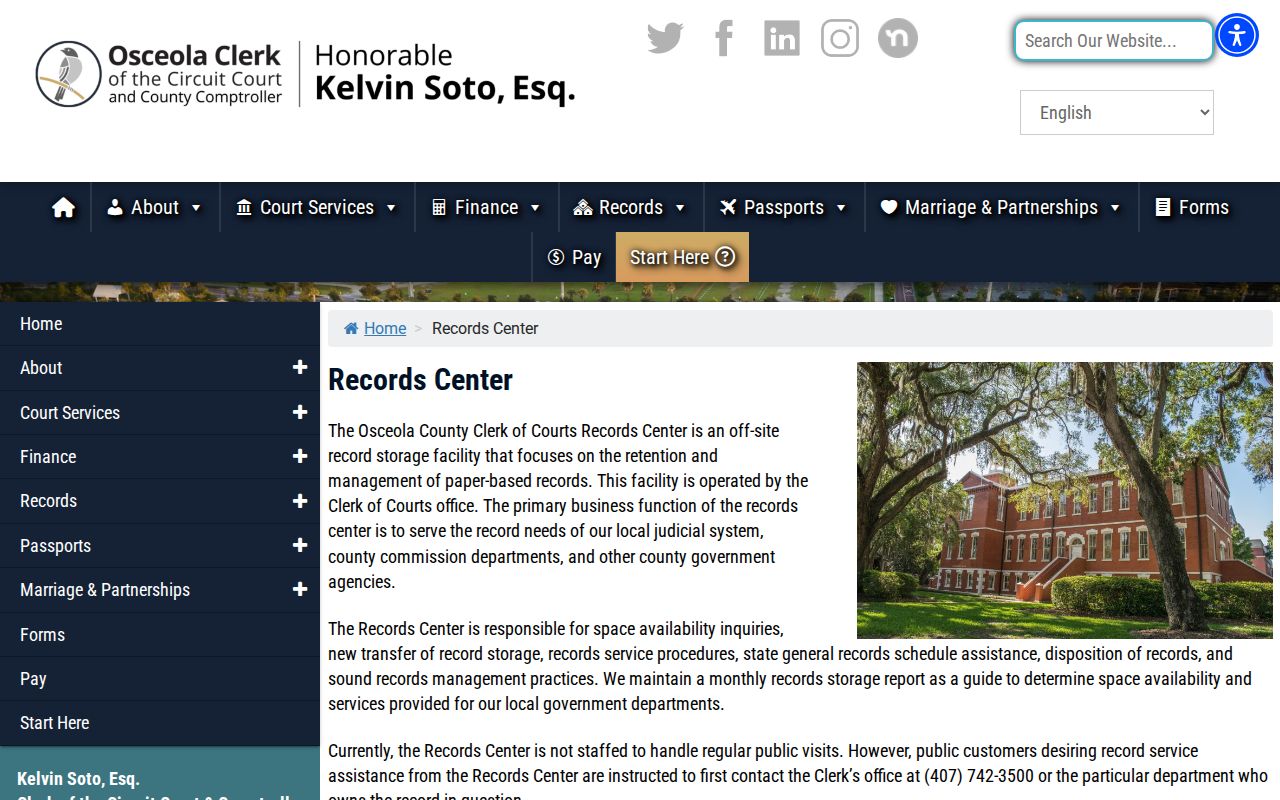
Ask for a specific series, approximate dates, party names, and legal description. Courthouse hours are 8 a.m. to 5 p.m. weekdays, with recording and payment cutoff at 4:30 p.m. Hard-copy certification is available by visit or phone, while electronic certification follows the clerk’s online workflow.
The Clerk’s recording information and copy guidance distinguishes index access, ordinary copies, electronic certification, and hard-copy certification during a St. Cloud previous residents search.
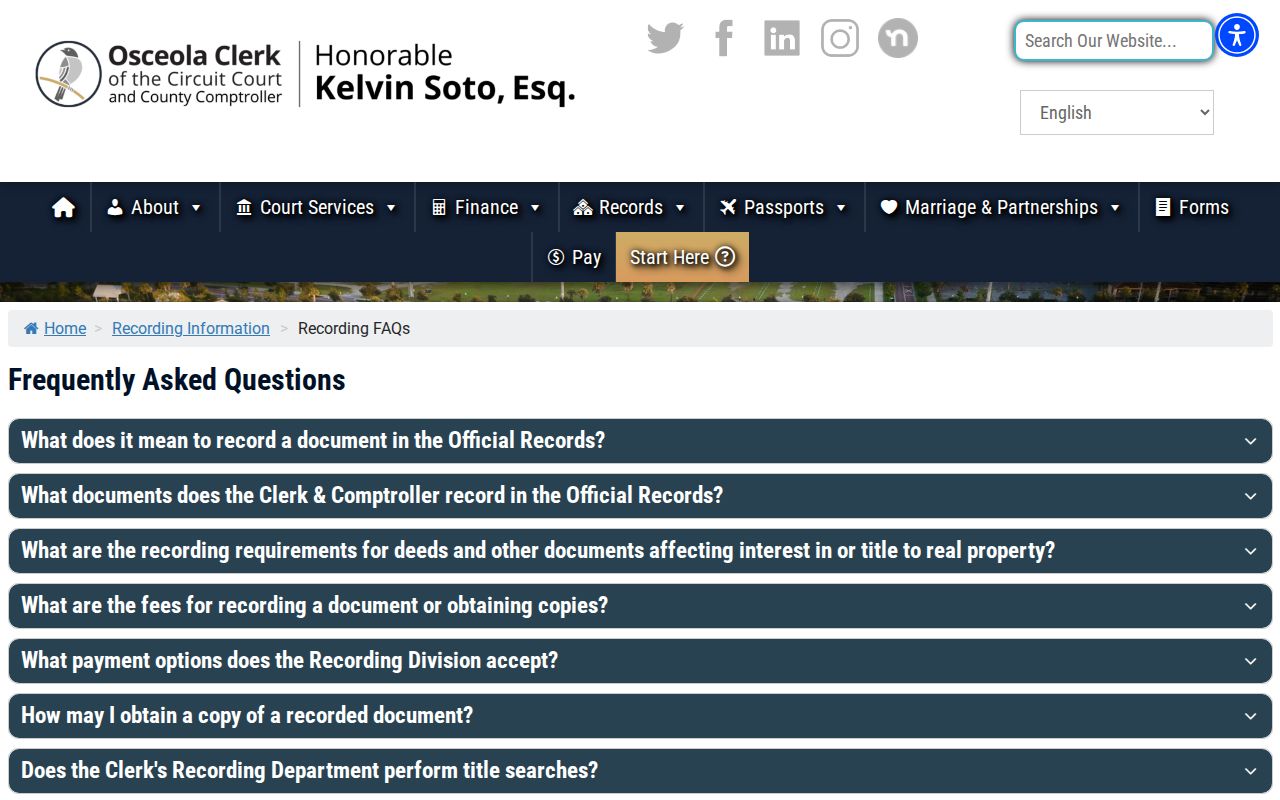
That distinction matters when a working image is enough for research but a certified record is needed to document a formal property or estate matter.
Note: Osceola County was formed in 1887, so earlier land or probate evidence may also lie in Orange or Brevard predecessor records.
Map 1924 St. Cloud Houses
The Library of Congress St. Cloud Sanborn set contains eight sheets dated March 1924. A sheet can distinguish a house, shop, outbuilding, lot line, and earlier street label. It does not name previous residents. Pair the footprint with a same-era directory or public census schedule.
The old grid has numbered streets and state-named avenues. Abbreviations and text recognition vary, so search full and short forms. Lot and block usually outlast a spelling or street-number change. The 2024 preservation plan adds address-level building types and construction-year leads, but its year-built field is not an occupant record.
THE TRAIL: current parcel → legal description → 1924 map footprint → directory address → census household
Match St. Cloud Past Households
Owners are only part of the address story. An alphabetical directory can list a householder, spouse, work, and home address. A reverse or criss-cross section changes the key to street and number. Exact St. Cloud directory runs and an authenticated sample entry were not verified in official crawlable sources. Ask the State Library, Osceola Library, or Osceola History for title, publisher, years, gaps, and the address section.
- Record the directory entry exactly, including abbreviations and spouse or widow marks.
- Check editions before and after it to bracket the household’s arrival and departure.
- Compare the closest public census year, using relationships and ages to separate namesakes.
- Carry the name and address into deeds, newspapers, death records, cemetery files, and probate.
The collection details belong on the St. Cloud directory book page. Here, those volumes serve one task: placing a listed person at this address during a publication cycle. Absence can mean a move, death, omission, annexation, or address change.
Date St. Cloud Building Changes
St. Cloud’s permit path can explain when a structure changed between past households. The Building Department page supports status checks, inspections, document printing, and payment. First verify that the Property Appraiser jurisdiction says St. Cloud. A postal St. Cloud address marked Osceola County belongs with county permitting.
The city permit research form requires the parcel or folio number, property address, requester contact, and a description of existing permit information sought. Staff research can be submitted online or by mail. Completed material appears under Attachments after any assessed payment. Fence permits moved to Community Development on February 1, 2025.
Permit applicants and contractors are linked to work, not automatically to residence. Use dates, parcel ID, and project type to explain physical changes, then return to directories or census records for occupants.
Close St. Cloud Resident Trails
Probate, death records, obituaries, and cemetery records can explain the end of an address trail. Probate cases may identify a decedent, personal representative, heirs, devisees, and counsel, subject to access rules. Florida death certificates under 50 years old restrict the cause-of-death portion, while copies without cause are more broadly available.
The successful manifest capture links to Florida death certificate access.
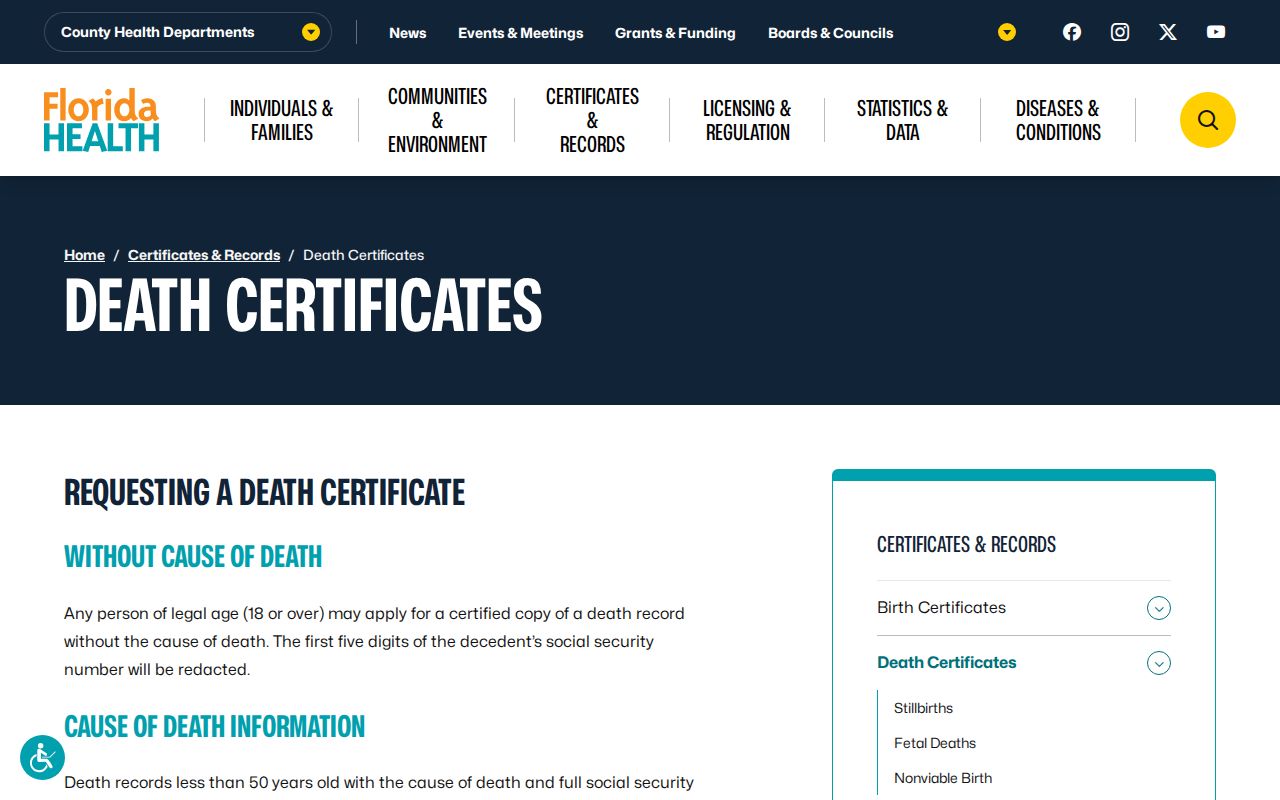
Certificate rules help choose the right copy without treating sensitive details as general directory data.
Mount Peace Cemetery began in 1910 and offers online burial records and maps. More than 300 Union veterans are buried there. A burial match can connect an obituary, death certificate, probate docket, pension file, census, and earlier directory entry.
The successful Mount Peace Cemetery page capture shows the city source for burial history and record access used to close a St. Cloud previous residents trail.
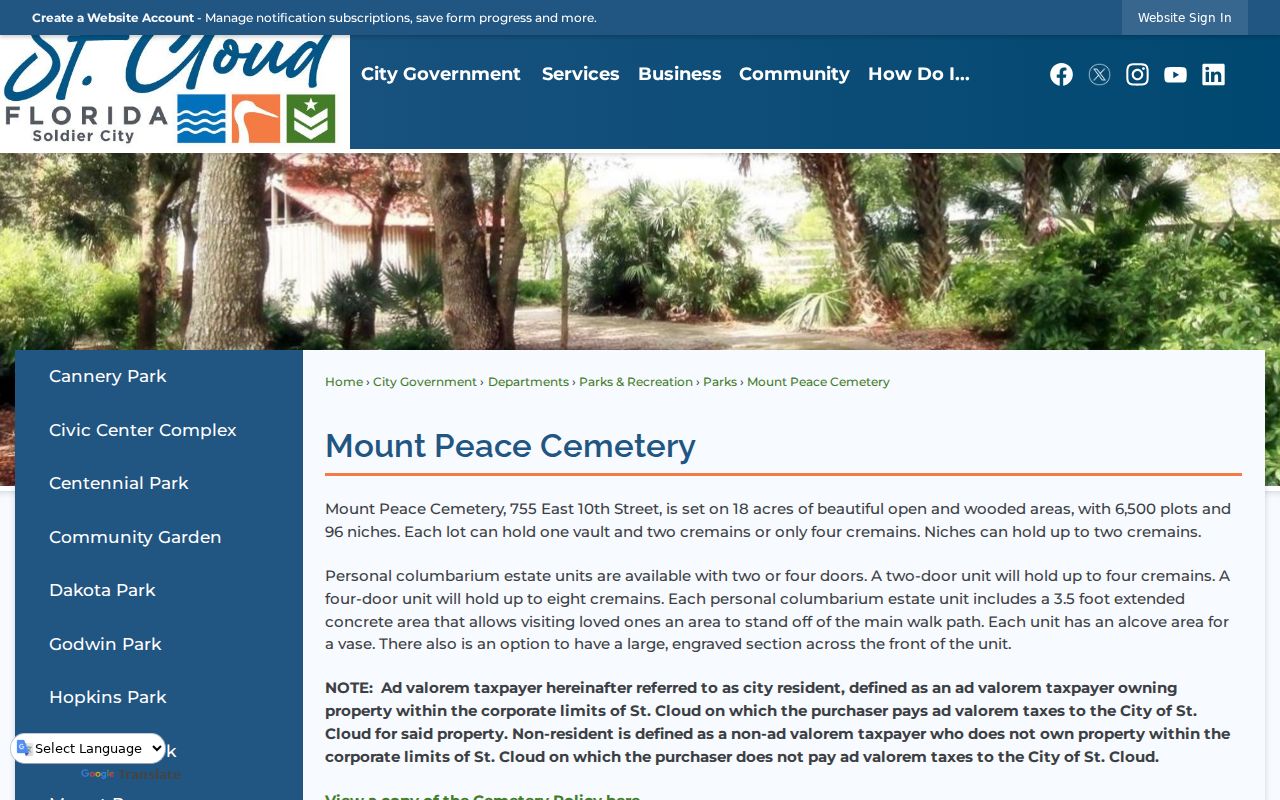
A cemetery result should be checked against a death certificate, obituary, probate file, or directory entry before identities are combined.
Florida also provides a public marriage certificate service that can connect surnames and family relationships found while tracing previous residents of St. Cloud.
A marriage certificate is a dated relationship record, not proof that either person occupied the researched address, so it must be paired with place-based evidence.
Archive St. Cloud Previous Residents
When local indexes stop, the State Archives of Florida offers catalog and research services for government collections, manuscripts, maps, photos, and indexes. Osceola History is the local gateway for photographs, family and neighborhood files, veteran organizations, businesses, and museum context.
The successful State Archives image represents that off-site fallback.
Search “Saint Cloud” and “St. Cloud,” plus Osceola, Kissimmee, a subdivision, veteran group, and each surname variant. Most 1890 population schedules were destroyed nationally, so deeds, taxes, voter material, cemetery records, and directories bridge that gap.
Respect St. Cloud Past Residents
A property trail supports genealogy, estate research, preservation, and personal house history. It does not justify unsafe contact, harassment, or an attempt to uncover a protected address. Florida’s Address Confidentiality Program provides substitute-address and mail-forwarding protection for qualifying survivors. Other exemptions may suppress details held by a custodian.
Lawful use. Use previous-resident records for lawful personal research. Never stalk, harass, confront, or try to defeat a confidentiality protection.
Older records may contain errors, merged names, or stale mailing addresses. Keep each source’s date and purpose attached to the fact. Ownership, a homestead exemption, a permit applicant, and a listed occupant are distinct forms of evidence.