
St. Cloud Directory Collections
The strongest official starting point is the State Library of Florida city directory collection. Its Florida holdings span the early 1900s to the present and are arranged by city and year. The public page does not expose a title-by-title St. Cloud run. Search “Saint Cloud” and “St. Cloud,” then ask whether a Kissimmee or countywide title has a St. Cloud section.
| Collection | Verified span | Where held | Access |
|---|---|---|---|
| Florida city directories | Early 1900s to present statewide | State Library | Catalog, reference, on site |
| St. Cloud reverse directories | Exact years not published | Verify locally and statewide | Staff request |
| Federal census | Public through 1950 | NARA and libraries | Name and place search |
| Sanborn map | March 1924, eight sheets | Library of Congress | Free scans |
| Mount Peace burials | Cemetery founded 1910 | City of St. Cloud | Online search and map |
Ask for each title, publisher, call number, inclusive years, gaps, and address section. Those details are safer than assuming a continuous run. The State Library Reference Desk is 850-245-6682.
Catalog St. Cloud Directory Years
The Osceola Library System offers catalog access, newspapers, licensed databases, and interlibrary reference. Its public pages do not list exact St. Cloud city directory years. A good request asks staff to check telephone books, county directories, school yearbooks, and local history files under both spellings of the city.
Osceola History is the local fallback for donated directories, photographs, newspapers, business files, and veteran material. State Archives can extend the search. Some cataloged microfilm images require a free account or an affiliate-library terminal.
A useful reference request identifies the sought surname, known address, and approximate decade. Ask whether a countywide or Kissimmee volume includes a St. Cloud section, whether it has a street index, and whether staff can check the title page and abbreviation key. Record the call number and edition exactly so the same volume can be found again. Telephone books, yearbooks, and local newspapers may then cover years missing from a directory run.
Note: No verified source supports a precise local publisher list or continuous year range, so exact claims must await reference confirmation.
Read St. Cloud Directory Entries
A city directory entry compresses facts. Copy the line as printed before expanding it. Typical fields include surname, given name or initial, spouse, widow notation, occupation, employer, home address, and sometimes a phone or owner mark. These are general fields to inspect, not a claim about an unseen St. Cloud volume.
| Name | Surname, given name, initials, and sometimes spouse |
|---|---|
| Status | A mark such as “wid” may identify a widow |
| Work | Trade, employer, or business role |
| Address | Street number used at publication time |
Publisher codes changed. Copy the abbreviation key first. Never turn a home mark into proof of deed ownership.
- Criss-cross directory
- A section arranged by street and number.
- Householder index
- An address-oriented list of the named householder.
- Abbreviation key
- The publisher’s guide to shortened words and marks.
Reverse St. Cloud Address Searches
A reverse section turns an old address into an occupant name. It suits St. Cloud’s numbered streets and state-named avenues, where abbreviations and scan errors vary. Search shortened and full street forms, then confirm the result against a census, deed, or map.
Exact local reverse-directory years remain unverified. If no address section exists, search a known resident alphabetically or ask local reference staff for telephone books. Modern address ownership belongs in the St. Cloud street directory workflow.
St. Cloud’s Eight-Sheet Map
The March 1924 St. Cloud Sanborn set contains eight sheets. It shows footprints, construction materials, uses, street names, house numbers, and fire systems, but not occupants. Pair a building with a directory or census before naming a household.
The University of Florida map collection offers broader Florida context.
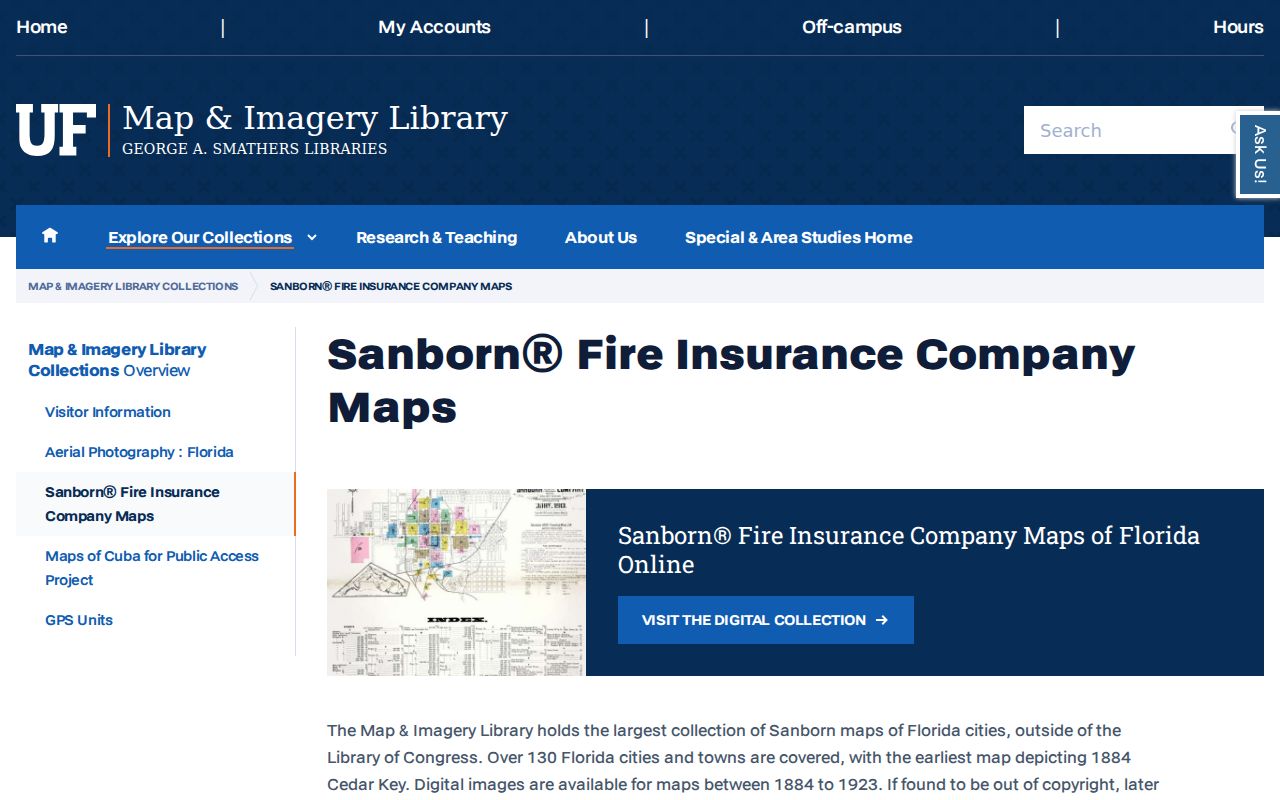
A map establishes place and structure, not residence. Lot and block descriptions often survive street-number changes.
Trace St. Cloud Family History
A city directory works best within a sequence. It can place a person between census years and reveal a move. Keep each edition separate, retain initials and spouse names, and note disappearances without guessing why.
- Find one verified name and address, trying spelling variants.
- Check each available edition before and after it.
- Use a reverse section to see the next listed occupant.
- Bridge gaps with the 1910 through 1950 censuses, deeds, and newspapers.
- Close a deceased resident’s trail with probate, burial, or a verified obituary.
The 1960 census opens in 2032 under the 72-year rule. Most 1890 schedules were destroyed nationally. County deeds, tax evidence, cemetery files, and directories must bridge that loss.
Veterans Shaped St. Cloud Records
St. Cloud began in 1909 as a Union veteran retirement colony. Early deeds connect with the 1910 census, Grand Army records, the 1913 Veterans Memorial Library, and Mount Peace Cemetery. Founded in 1910, Mount Peace contains more than 300 Union veterans and offers a city burial map.
A family trail can run from land purchase to census, GAR affiliation, mapped address, pension file, and burial. Agreement across records matters more than one matching surname.
The library research portal helps locate related material.

Reference staff can confirm titles and access rules hidden from a basic web search.
Search Digitized St. Cloud Directories
Digital searches should combine city variants, surname variants, an address, and a business. OCR can misread initials and the dot in “St.” Browse nearby pages when text search fails. A countywide title may hide St. Cloud in a separate section.
The digitized Saint Cloud search is a discovery aid.
Verify title page, publisher, edition, place coverage, and page image before citing a result.
The State Library guide is the official collection overview.
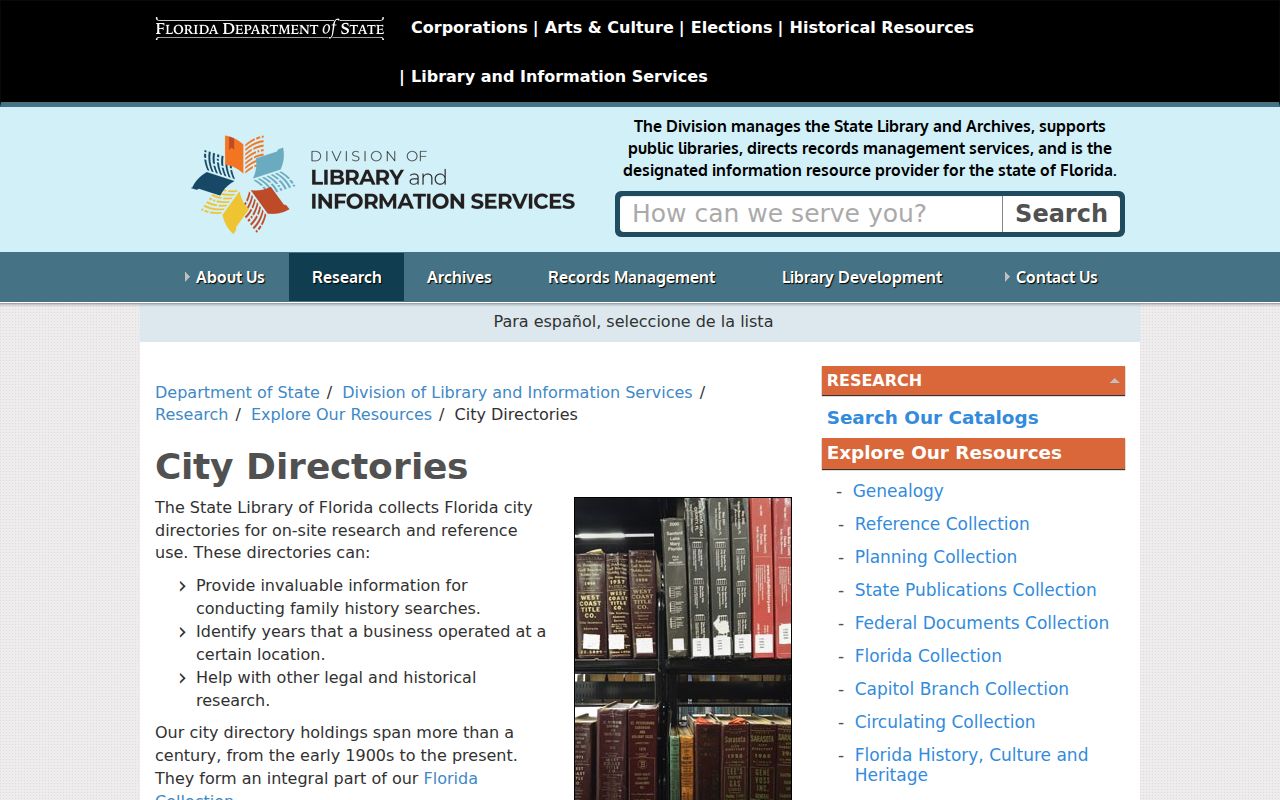
Reference staff can confirm whether a title fills a gap and contains an address section.
Bridge St. Cloud Directory Gaps
Directory years should be joined with records that have their own dates. The public federal census offers household snapshots through 1950. A deed identifies parties to a land transfer, not every person in the house. Marriage and death records anchor events, while a newspaper may report a visit, move, business opening, or funeral. Mount Peace burial data can lead to probate and an obituary, but a memorial entry should still be checked against the city burial record and a death certificate when certainty matters.
Yearbooks may preserve a student’s name, school, activity, and class year. Search the Osceola Library catalog, school libraries, and digital collections with verified provenance. Church baptism, marriage, and burial registers can fill another gap, though each congregation controls access. Ask with a name and date range and respect closed records.
A person who disappears between two city directories did not necessarily leave St. Cloud. The publisher might have missed the household, changed a spelling, moved the entry into a suburban section, or printed facts gathered months earlier. Check the reverse pages, spouse, business, and both surname forms before concluding that a move occurred.
St. Cloud Addresses Beyond Directories
The city’s 2024 preservation plan is an address index, not a resident list. It names candidate resources, building types, and years. Use one address to locate a Sanborn footprint, directory entry, and census household. The build year never identifies an occupant.
St. Cloud incorporated in 1911, while Osceola County formed in 1887. Earlier evidence may rest under county or predecessor jurisdictions. The veteran colony began in 1909, creating a compact early cluster of plats, deeds, census entries, GAR records, cemetery burials, and municipal history.
Newspapers add marriages, legal notices, ads, arrivals, and obituaries. Search a full name beside a street, spouse, employer, or organization, then compare the report with an official record. Church registers remain congregation-controlled, and private membership rosters are not presumed public.